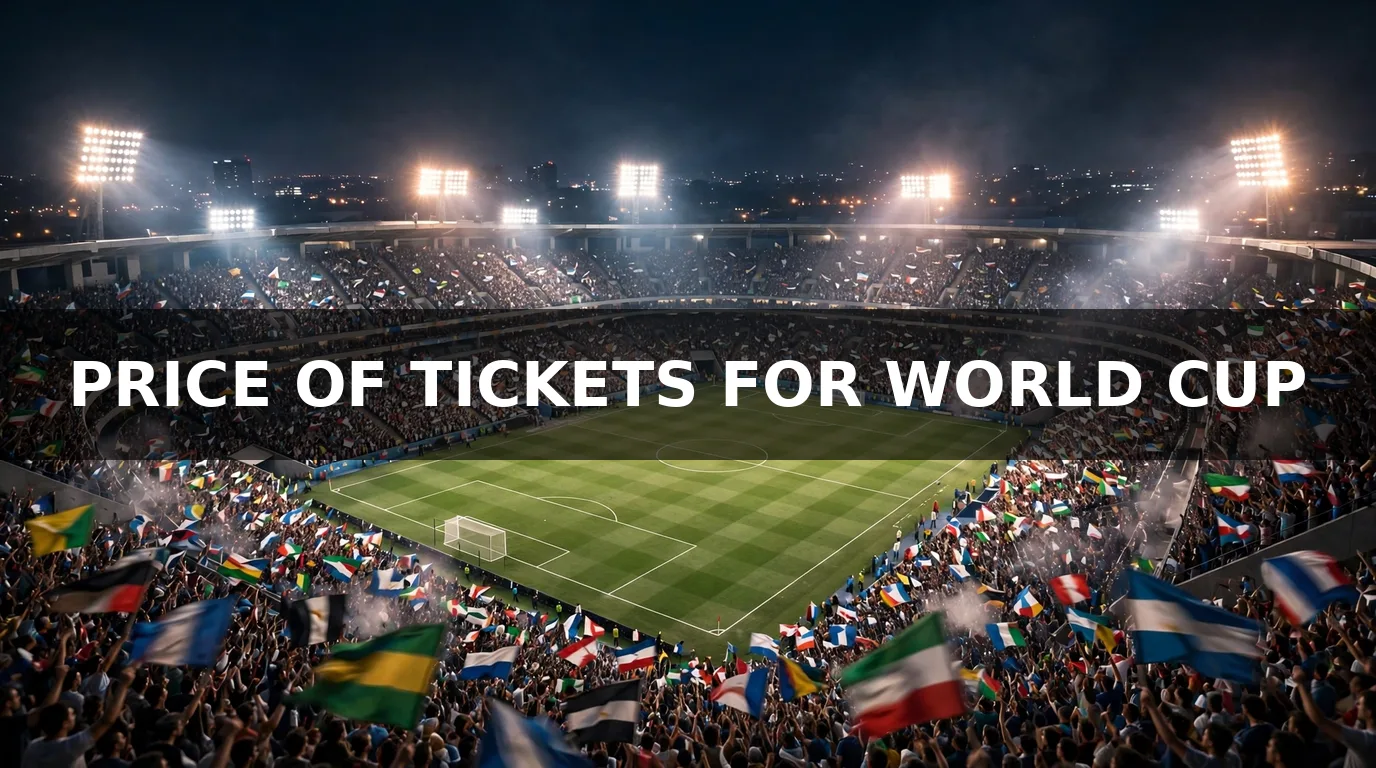
The price of tickets for World Cup 2026 starts at $60 for the cheapest seats and climbs into the thousands for the biggest matches. That range is so wide that a single number never tells the real story: the same tournament sells a $60 group-stage seat and a final ticket listed for nearly $11,000, and what you pay depends on the match, the seat, the sales phase, and how quickly demand moves the price.
This guide lays out the real numbers — by round, by seating category, and with the fees included — and explains how FIFA sells the tickets, what the whole trip costs, and how to avoid paying far more than you need to.
Price of Tickets for World Cup 2026 at a Glance
The 2026 World Cup is the biggest in history: 48 teams, 104 matches, 16 host cities across the United States, Canada, and Mexico, running from June 11 to July 19, 2026. The final is scheduled for July 19 at MetLife Stadium in East Rutherford, New Jersey.
FIFA sells tickets in categories, and the price moves with the round. The figures below reflect the face-value ranges published through FIFA’s official ticketing portal, before the service fee. Because FIFA uses dynamic pricing, the price you actually see for a specific match can sit above or below these ranges depending on demand.
| Round | Category 1 | Category 2 | Category 3 | Cheapest tier |
|---|---|---|---|---|
| Group stage | $700–$1,200 | $500–$900 | $120–$200 | from $60 |
| Round of 32 | higher than group stage | — | — | from $60 |
| Round of 16 | higher still | — | — | from $60 |
| Quarter-finals | $150–$1,200+ | — | — | varies |
| Semi-finals | $250–$2,500+ | — | — | varies |
| Final | $6,730–$7,875 | $4,500–$5,500 | $1,490–$2,200 | from $60 |
The $60 figure is real but narrow: it is the entry point for selected group-stage seats and for a supporter tier that is only available through national federations to fans with a qualifying attendance history. It is not a general-sale price for every match, and it is not available for the final through the open market. For most buyers, a realistic group-stage budget starts in the low hundreds of dollars per ticket, not at $60.
Prices reported as the tournament approached underline how far demand can push things. In November 2026, tickets for the United States’ opener against Paraguay in Los Angeles were listed from $1,120 up to $6,050 for hospitality seats, while seven group-stage games still had general-sale tickets at $380. Seventeen group-stage games were already sold out, including the tournament opener between Mexico and South Africa in Mexico City on June 11. The most expensive final tickets were reported at nearly $11,000.
What Decides the Price?
Five things move the price of a World Cup ticket more than anything else.
The round matters most. A group-stage game between two smaller teams is the cheapest ticket in the tournament. Every step deeper into the knockout rounds adds a premium, and the final sits in a different world from everything before it.
The teams matter almost as much. A group game featuring the United States, Mexico, England, Argentina, or Brazil costs far more than a comparable fixture between two less-followed sides. Once the draw is made and the fixtures are known, prices for the glamour games jump first.
The seat category sets the band. Category 1 sits closest to the action with the best views and the highest prices. Category 2 and Category 3 trade view for savings, and the supporter tier is the budget option where it exists. The same match can easily cost five or ten times more in Category 1 than in the cheapest seats.
The venue plays a role too. Larger stadiums in major cities tend to carry higher prices, and matches in the United States have generally been priced above those in Canada and Mexico for comparable fixtures.
The sales phase and timing finish the job. FIFA sells in phases, and prices are adjusted dynamically as demand changes. An early-phase ticket for a match that later becomes a blockbuster can look cheap in hindsight; a late ticket for a game nobody wanted can sit unsold even at a reduced price.
Ticket Categories Explained
FIFA’s category system is simple once you know what each tier means.
Category 1 is the premium standard seat: the best locations in the stadium, usually along the sides near the halfway line, with the clearest view of the whole pitch. These are the first seats to sell out for big matches and the most expensive standard option.
Category 2 covers good seats with a slightly less central view — behind the goals or higher up the sides. For most fans, Category 2 is the sweet spot: a strong view of the game at a meaningful discount to Category 1.
Category 3 is the budget standard tier: higher rows and corners, but still a real seat inside the stadium for a World Cup match. For a group-stage game, this is where the best value usually sits.
The supporter tier, priced from $60, is different from the rest. It is allocated through national football federations to loyal supporters, represents only a small share of each game’s capacity, and is not available through general sale. If you see a $60 ticket advertised by anyone other than FIFA or your national federation, treat it with suspicion.
Hospitality packages sit above all of these. They bundle premium seats with food, drinks, lounge access, and sometimes parking or gifts. They cost far more than a standard ticket — the United States opener’s hospitality seats reached $6,050 — and they are the only official route past the normal purchase limits.
How FIFA Sells the Tickets
Understanding the sales process is the difference between getting a ticket at face value and paying a reseller’s markup.
Sales run in phases. The early phases worked as free-entry draws: fans registered with a FIFA ticketing account, applied for the matches they wanted, and paid only if selected. Later phases included a last-minute sales phase run on a first-come, first-served basis, with single-match tickets available in real time until the tournament.
Purchase limits apply throughout: four tickets per person per match, one match per day, and a maximum of 40 tickets per household across the whole tournament. These limits are enforced through the FIFA ticketing account, and they are one reason hospitality packages exist — they sit outside the standard cap.
One cost catches many first-time buyers by surprise: FIFA adds a 15% service fee on top of the ticket’s face value. A $200 ticket actually costs $230, and a $1,000 ticket costs $1,150. Always add the fee before comparing prices or setting a budget.
Payment is taken in US dollars for international buyers, regardless of which host country the match is in. That simplifies budgeting for visitors, but it also means exchange rates and card fees deserve a line in the plan.
FIFA also runs its own official resale marketplace, where fans who bought through FIFA can resell tickets they cannot use. It is the only resale route FIFA stands behind, and it is the safest place to buy a ticket after the original sale has closed.
What the Whole Trip Really Costs
The ticket is often the smallest part of a World Cup trip, and this is where most budgets go wrong. A $60 seat looks like a bargain until it needs a $250 hotel night and $100 of transport to reach it — at which point the ticket is only about 15% of the day’s spending.
Accommodation is usually the biggest cost after the ticket. Host cities see hotel prices climb sharply around match days, and the most affordable rooms disappear first. Booking early, staying slightly outside the centre, or sharing a rental with friends can cut this cost more than any ticket strategy.
Transport adds up quietly: flights between host cities, airport transfers, and getting to stadiums that often sit outside downtown. Some cities run special match-day transit; others do not, and a taxi at midnight after a game is never cheap.
Food, fan zones, and the rest of the experience deserve a daily budget of their own. The tournament lasts more than a month, and a two-week trip can easily cost more in living expenses than in tickets.
The practical rule is simple: set a total trip budget first, then see which tickets fit inside it — not the other way around.
Resale: What to Know
If the match you want is sold out, resale is the only official option left — but it has rules of its own.
FIFA’s own resale marketplace is the safe route. Tickets listed there were bought through FIFA, and the transfer happens inside FIFA’s system, so the ticket you receive is genuine and in your name.
Third-party resale sites and social media sellers are a different story. Prices there can be several times face value, and the risk of fake or invalid tickets is real. Four seats for the final were once listed at just under $2 million each on an official resale page — a reminder that resale prices have no ceiling and no connection to what a ticket is worth.
Never buy a ticket that cannot be transferred through FIFA’s official system. A screenshot, a PDF, or a promise is not a ticket.
How to Buy Safely
A few habits protect both your money and your match day.
Buy only through FIFA’s official ticketing portal or its official resale marketplace. Every other source is a gamble, whatever it promises.
Create your FIFA ticketing account well before a sales window opens, and keep your details up to date. Sales windows are short, and a forgotten password at the wrong moment is an expensive mistake.
Register for every phase you are eligible for, even if you are not sure which matches you want. Registration is free, and you only pay if you are selected.
Set a maximum price before you start looking, fee included, and stick to it. Dynamic pricing is designed to test exactly that discipline.
Keep every confirmation email and order number. If anything goes wrong with a ticket, those are the first things FIFA’s support will ask for.
Frequently Asked Questions
How much do World Cup 2026 tickets cost?
Prices start at $60 for selected Category 4 and supporter-tier group-stage seats, and rise to $6,730–$7,875 for Category 1 final seats, with the most expensive final tickets reported near $11,000. Most group-stage tickets cost a few hundred dollars, plus a 15% service fee.
What is the cheapest way to attend a World Cup 2026 match?
Target a group-stage game between lower-profile teams, choose Category 3, and buy during an official FIFA sales phase. The $60 supporter tier is the cheapest of all, but it is only available through national federations to qualifying loyal fans.
Can I buy World Cup tickets at the stadium?
No. All official sales run through FIFA’s ticketing portal and its official resale marketplace. There is no general sale at stadium gates.
How many World Cup tickets can one person buy?
Four tickets per match, one match per day, and no more than 40 tickets per household across the tournament. Hospitality packages sit outside these limits.
Is the 15% service fee included in the listed price?
No. FIFA adds a 15% service fee on top of the ticket’s face value, so a $200 ticket costs $230 in total.
Are World Cup 2026 tickets refundable?
Refund rules depend on the sales phase and the ticket type, and FIFA’s terms apply. Check the conditions on your order before buying, and never assume a ticket can be returned.
When is the World Cup 2026 final?
The final is on July 19, 2026, at MetLife Stadium in East Rutherford, New Jersey.
Planning Around the Draw
The draw decides more than the fixtures — it decides the prices. Once the groups are set on December 5, the glamour games become obvious and their tickets move first, so fans who already know which teams they want to follow should be ready to act the moment sales open for those matches. If your team lands in a group with another big name, expect that game to be the most expensive of their three group fixtures. On the other hand, a favourable draw can open up a cheaper route: a group-stage game against a less-followed opponent in a smaller venue is often the best-value ticket in the whole tournament, and it still puts you inside a World Cup stadium on a match day.
Final Thoughts
The price of tickets for World Cup 2026 is not one number but a range shaped by the match, the seat, and the moment you buy. The cheapest seats are real but scarce, the biggest matches are expensive for a reason, and the fee and the trip around the ticket matter as much as the ticket itself.
The fans who get the best value follow the same pattern: they register early, they know their maximum price before they look, they buy only through FIFA’s official channels, and they budget for the whole trip, not just the seat. Do that, and the World Cup is an experience you can actually afford — instead of a receipt you regret.
Read Also: Isnvenice.com/en Networking Events Hub (2026 Guide)


1 response